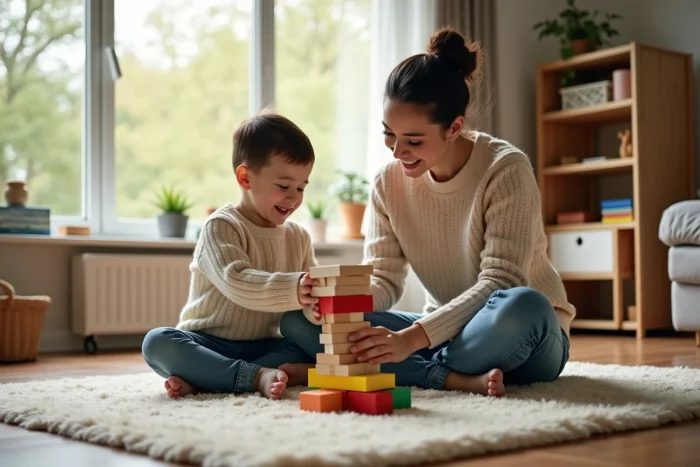
A three-year-old can understand a complex instruction but will struggle to complete two simple tasks without support. Language acquisition never follows a strict timeline, even in very stimulating family contexts. Individual differences persist despite widely shared developmental milestones in research.
Spectacular periods of progress alternate with phases of stagnation or apparent regression. Some social skills emerge well before mastering motor skills that are simpler in nature. However, the main milestones remain reliable for guiding parental support and identifying specific needs.
What happens between 0 and 6 years: essential markers of child development
Between birth and six years, transformations occur at a striking pace. Each age group reveals its own developmental stages: moving from innate reflexes, sucking, grasping, Moro reflex, to increasingly complex skills. Holding the head up, rolling over, sitting, then crawling, walking, and running: each new motor acquisition paves the way to autonomy. Meanwhile, fine motor skills assert themselves day by day through everyday actions like grasping a small spoon, stacking blocks, or drawing first lines.
On the cognitive level, the child distinguishes faces, reacts to familiar voices, and recognizes objects even when they disappear from view. Next comes solving small challenges, symbolic play, transforming a box into a car, a cardboard into a fort, and memory gradually organizing itself. The language development also enriches, from cooing to babbling, up to the first sentences, sometimes funny or unexpected, reflecting an increasingly nuanced understanding of reality.
On the socio-emotional side, attachment builds through gaze, imitation, emotion management, and the ability to relate to other children or adults. These skills never develop in isolation. They rely on a set of factors: heredity, family context, quality of interactions, nutrition, and sleep. A child born prematurely may, for example, progress at their own pace, which sometimes requires special attention. To explore each developmental stage in more detail and find suitable resources, visit child on Concept Enfance.
How to recognize and support major cognitive, social, and emotional milestones?
Identifying the major developmental milestones requires observation and a nuanced perspective. From the first weeks, the infant responds to voices, offers smiles, and then attempts to imitate gestures: all signs that weave the attachment bond with their reference figures. Around 12 months, they begin to understand simple instructions while sometimes showing separation anxiety. This phase, often puzzling for adults, actually reflects a healthy construction of the sense of security.
Curiosity guides cognitive development: manipulating objects, solving difficulties, inventing role-playing games. The child appropriates the concept of object permanence and then refines their memory. To support this thirst for discovery, offer free play, read together, and engage in conversation through words and gestures. Encourage the development of fine and gross motor skills: stack blocks, draw, run in the park, climb on play structures.
On the emotional side, the range quickly expands: joy, anger, fear, pride, or jealousy. Acknowledge these feelings, put words to them, and establish reassuring rituals. Encourage your child to express themselves, whether through speech, gestures, or gaze.
Here are some useful markers for parents wondering about their child’s development:
- If you have persistent doubts about language, behavior, or social interactions, quickly seek the opinion of a pediatrician.
- Intervention at the first signs can boost progress and limit the risk of lasting delays.
At the heart of all this, the family environment, the quality of dialogue, and physical and emotional security lay the foundations that the child needs to grow and thrive.

Concrete advice and resources to support every parent daily
Supporting the development of the child requires a combination of sustained attention and trust: there’s no need to panic at the slightest deviation, but persistent questioning should not be neglected either. In the face of a plethora of opinions, prioritize reliable and validated resources. Your pediatrician remains the best contact for any questions regarding the pace of acquisition or the specifics of your child’s journey. Health centers offer multidisciplinary support and preventive consultations, invaluable for addressing issues of motor skills, language, or emotion management.
To stay on track during these early years, development guides and developmental milestone charts created by recognized organizations can be incredibly helpful. The WHO provides growth curves and objective markers, while the CDC offers visual tools to track motor, cognitive, and language acquisitions month by month. These resources are useful reference points, never rigid standards: each journey remains unique.
Over the days, it is often the small gestures that make the difference: reading a story aloud, pointing to an object, encouraging motor initiative, or applauding each new achievement. Spend time exchanging, cultivate observation, and do not hesitate to consult a professional if doubts arise. Discussions among parents, attending early learning workshops, or visiting welcoming spaces enrich your educational markers and help you refine your understanding of the key stages of development. For a child, growing means accumulating countless small steps. Your steps, as a parent, are equally decisive.