
One ordinary evening, the door slams shut. Yet, no law allows one spouse to exclude the other from the family home on a whim. The idea persists, but legal reality stands in stark opposition. Leaving the household without agreement or legal framework exposes one to a cascade of consequences: repercussions on child custody, division of assets, and sometimes much more.
Even without a wedding ring, protections also apply to partners in a civil partnership or cohabiting, depending on the situation and the status of the housing. Each person’s rights are rooted in the matrimonial regime, the lease agreement, or the title of ownership, and of course, the presence of minor children weighs heavily in the balance.
Being put out: what the law says about the couple’s housing
In France, the law jealously guards the couple’s roof. Whether the housing is rented or owned, no one can evict the other without a judge’s validation. The marital home is not just a property: it represents the center of family life. Even if one spouse holds the lease or the title of ownership, the other cannot be excluded without a clear judicial decision.
Granting one exclusive use of the residence is never a personal decision. Only a protective order or a measure from the family court judge opens this possibility. Changing the lock, prohibiting entry, or pressuring for a departure: all these practices cross the red line and can lead to civil or criminal prosecution. Leaving the home without agreement or judgment is not trivial: this choice will weigh during the divorce, particularly on the distribution of parental rights and the management of assets.
This topic has been extensively detailed in the following question: can someone be put out according to La mariée de Sophie. It reveals the rare situations where a judge allows the eviction or departure of a spouse, usually in cases of danger or proven violence. Outside of these exceptional cases, respect for the common home is imposed on all.
Separation, the matrimonial regime, or the absence of a contract influences the division of assets, but never the immediate right to reside in the housing. The judge remains the sole decision-maker: they can grant one exclusive use of the home, regardless of the property’s status. Anyone attempting to bypass this risks weakening their own position and incurring liability.
Who can stay in the home and under what conditions?
The rules governing residence in the marital home are precise. It does not matter who holds the title of ownership or who signed the lease: as long as no judicial decision has been made, the housing remains that of both spouses.
The family court judge examines each situation before granting, if applicable, exclusive use of the home. They rely on several factors: the children’s interests, the circumstances of the breakup, the financial situation, the existence or non-existence of a marriage contract or civil partnership, the presence of specific clauses… and of course, any allegations of violence or danger. Without their intervention, no one can force the other to leave, whether one is the leaseholder or the owner.
Here are the main criteria considered in this type of case:
- In a separation between two owners, the principle of joint ownership applies: each retains their right to inhabit the property as long as no division has been pronounced by the judge.
- When it comes to rented housing, the solidarity clause protects the non-signatory spouse: as long as the lease is not terminated or a judge’s order has not been issued, they retain their right to housing.
- The presence of minor children often guides the judge’s decision: their stability and access to school take precedence when allocating the home.
Unmarried couples, or simply invited individuals, do not have this level of protection: only a solid legal link, such as marriage or civil partnership, grants the right to remain in the housing. The procedure remains strict: without an enforceable title or a judge’s decision, any attempt at eviction exposes one to legal recourse.
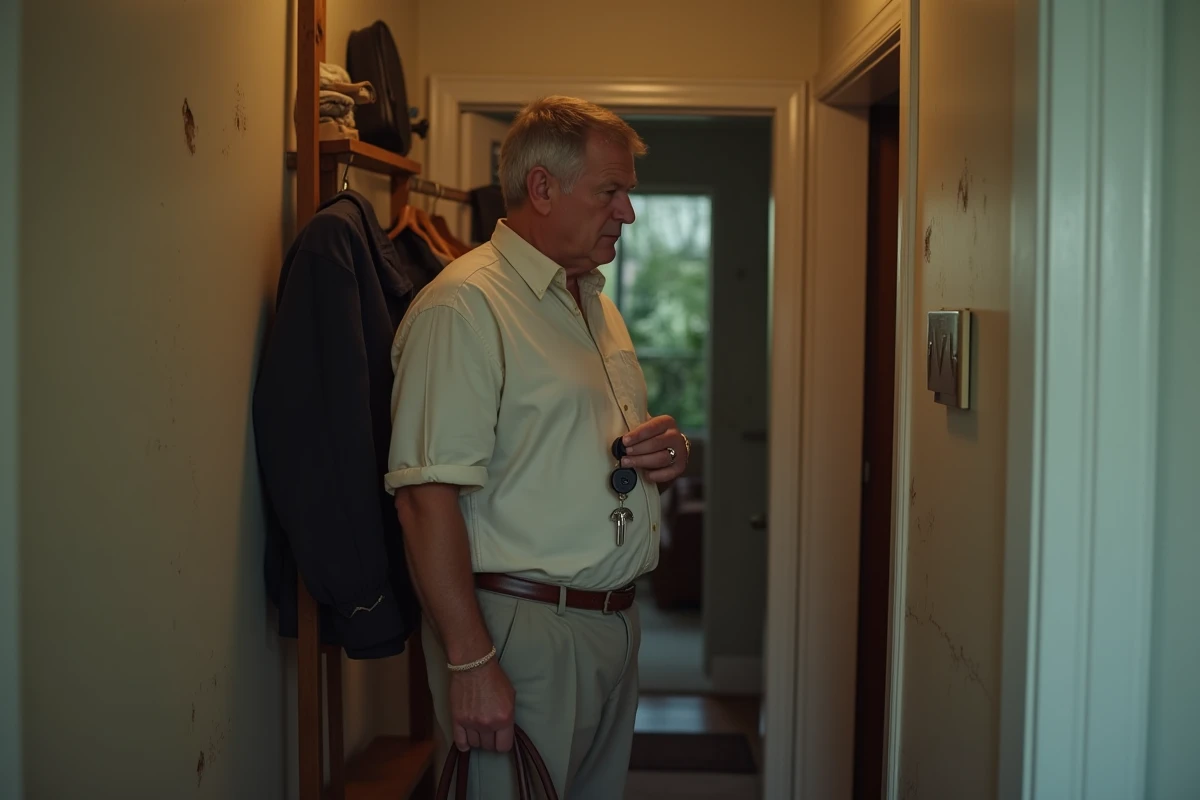
Advice and resources to assert your rights without escalating the conflict
If the threat of eviction becomes real, one must rely on the law. Do not yield to pressure or fits of anger: the protection of the spouse or partner is enshrined in law. Changing the lock, intimidation, or refusal of access are strictly prohibited and fall under Article 226-4-2 of the Penal Code. Acting alone in this context exposes one to legal proceedings and claims for damages.
Some immediate measures can help preserve your rights:
- Consult a lawyer quickly: they will know how to activate the necessary recourse, file a request for a protective order, or approach the court if the situation requires it.
- Request a bailiff to draw up a report and secure evidence: photos of the housing, written exchanges, a list of personal belongings.
- In case of emergency or violence, request a protective measure from the family court judge: they can grant exclusive use of the home and prohibit the other from approaching.
Avoid fueling the conflict. Family mediation, conducted by professionals, sometimes paves the way for an agreement on housing or asset management. No one can impose a departure without a judge’s decision or freely given consent.
Keep a written record of every exchange, assemble a solid file: copies of deeds, references to the Civil Code, notarized documents. In case of inventory or agreement to formalize, the notary can intervene, but they do not replace the judge if the disagreement persists.
The right to stay in one’s home is not to be taken lightly: in the storm, it remains a foundation, even when everything else shakes around. A lock may give way, but justice does not let go so easily.