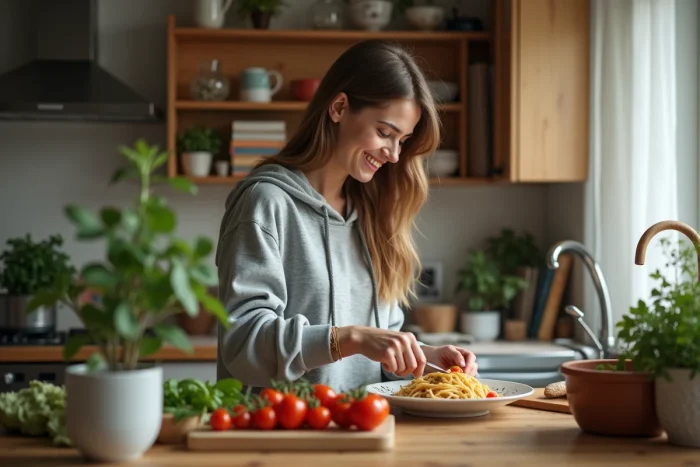
Coming back from class at 7 PM with a half-empty fridge, a two-burner stove, and a tight budget: this is the daily life of most students. The OVE reports that an increasing number of students skip at least one meal per week for financial reasons since 2022. Eating quickly shouldn’t mean eating poorly, and a few simple habits can radically change what goes on the plate without breaking the bank or taking too much time.
Student batch cooking: prepare five meals in one session
Most articles offer single recipes. The problem is that not everyone cooks every night when juggling classes, studying, and a part-time job. Batch cooking, which has seen a surge in interest in French since 2022, is based on a concrete principle: set aside an hour on Sunday to prepare the basics for the week.
Cook a large volume of rice or pasta, make a homemade tomato sauce (canned tomatoes, onion, olive oil, salt, pepper, garlic), and chop seasonal vegetables. Everything is stored in portions in airtight containers in the fridge. On Monday night, just reheat the rice with the sauce and add a fried egg. On Tuesday, the same pasta turns into a cold salad with grated cheese and raw vegetables.
You can also find smart meals with myn idee on TwimmCook to vary the combinations without starting from scratch every night.
The time savings are significant: instead of spending twenty minutes every night, you invest in a single session and only need to assemble the rest of the week’s meals in five minutes. Feedback on this point varies, as it depends on the size of the fridge and the number of containers available, but even with minimal equipment, preparing two bases (a starch and a sauce) is enough to cover three or four dinners.

Pan recipes in under fifteen minutes
When Sunday batch cooking doesn’t happen, a plan B is necessary. The frying pan remains the most versatile tool in a kitchenette. No oven or food processor needed: just a burner, a pan, and a knife.
Scrambled eggs with tomatoes and cheese
Sauté half a chopped onion in a drizzle of oil. Add a diced tomato, let it melt for two minutes. Crack two or three eggs directly into the pan, stir over low heat. Add grated cheese just before turning off the heat so it melts without hardening. Salt, pepper, and it’s ready. The total cost is no more than a bag of chips.
Express Cantonese fried rice
Use rice cooked the day before (or microwaveable rice in a pinch). In the hot pan with a bit of oil, sauté the onion, then add frozen vegetables like peas and carrots. Push everything to one side, crack an egg on the other side, scramble it, then mix everything with the rice. A splash of soy sauce replaces salt and seasoning. Ten minutes flat, just one utensil to wash.
Pan-fried chicken with mustard sauce
Slice a chicken breast into thin strips to speed up cooking. Sear over high heat with oil, salt, and pepper. Once golden, reduce the heat and add a tablespoon of mustard diluted in a bit of water. Stir and let it reduce for a minute. Serve with pasta or bread. The sauce is made in the same pan, no extra pot needed.
CROUS meal boxes: an unknown option for cooking in residence
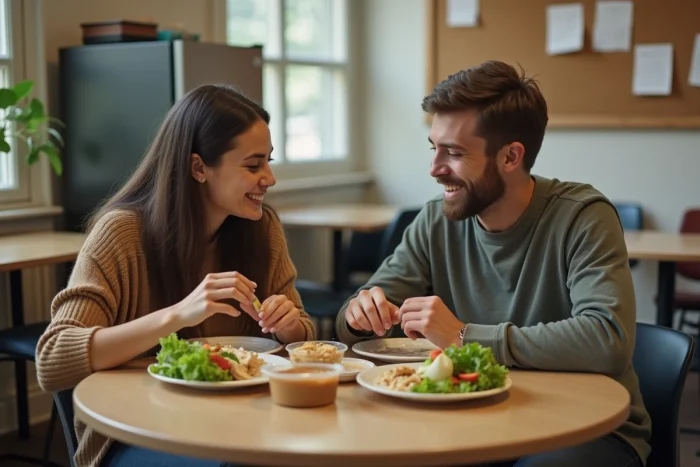
Several CROUS, particularly those in Grenoble and Toulouse, have been testing meal boxes to cook since 2023-2024. The principle: pick up a kit with pre-measured ingredients and a simple recipe, all designed for preparation in a kitchenette in ten to fifteen minutes.
These boxes can be picked up in residence or at the university restaurant, which even eliminates the trip to the supermarket. For students who are hesitant to start cooking or who have never learned, it’s a concrete entry point. You receive exactly what you need, no waste, no need to stock up on spices.
This initiative is still in the testing phase and is not yet available on all campuses. But it illustrates a trend: support is no longer limited to meals served at the university restaurant; it extends to autonomous culinary learning.
Student pantry: the ingredients that save the week
Having three recipes in mind is useless if the cupboard is empty. A well-thought-out pantry allows for improvising a decent meal at any time. Here’s the essential base to maintain:
- Pasta, rice, or couscous: a versatile starch that keeps for a long time and serves as a base for almost all quick recipes.
- Eggs: the cheapest protein in the aisle, cooked as an omelet, scrambled, fried, or hard-boiled for a salad.
- Onions and garlic: the aromatic base of any kitchen, long shelf life without refrigeration.
- Canned peeled tomatoes: replace fresh tomatoes out of season for sauces and quick stews.
- Olive oil and mustard: enough to dress a salad or make a sauce in thirty seconds.
- Grated cheese: freezes well, adds flavor and calcium to any hot dish.
With these six basic ingredients, you can easily cover ten different meals. The rest, fresh vegetables, chicken, soy sauce, can be added based on current promotions and cravings.
Cooking as a student requires neither special talent nor a comfortable budget. A frying pan, a few staple ingredients, and the habit of preparing in advance are enough to eat well throughout the week. The real barrier is not the lack of recipes; it’s the absence of the anticipation habit, and that can be developed from the first batch cooking session.